
Stand Here for a While
A primer on connecting to place

You belong to people, yes. But you also belong to places. In a life that moves quickly and often feels abstract, it’s good to find places that call you back to yourself.
I was on the South Dakota plains last week, officiating a memorial service beneath bluebird skies. Prairie wind offered its own invocation, rearranging hair and memories, nudging family and friends nearer to each other. The service was good. Honest. The kind where grief and gratitude sit side by side in folding chairs.
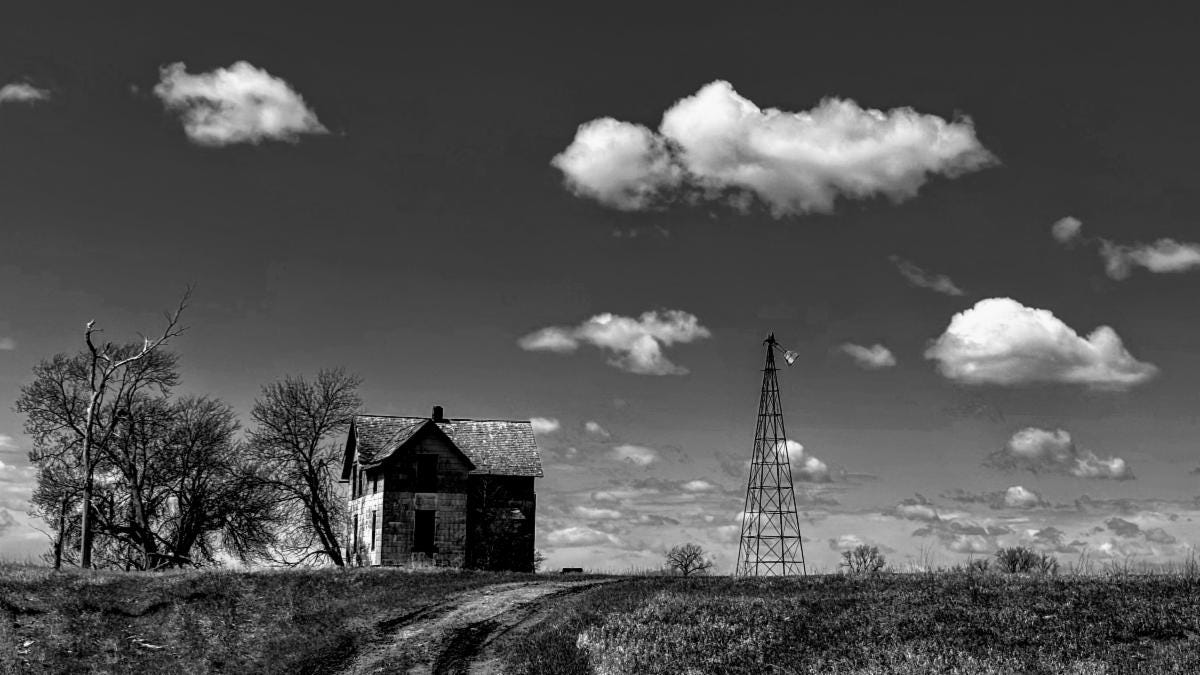
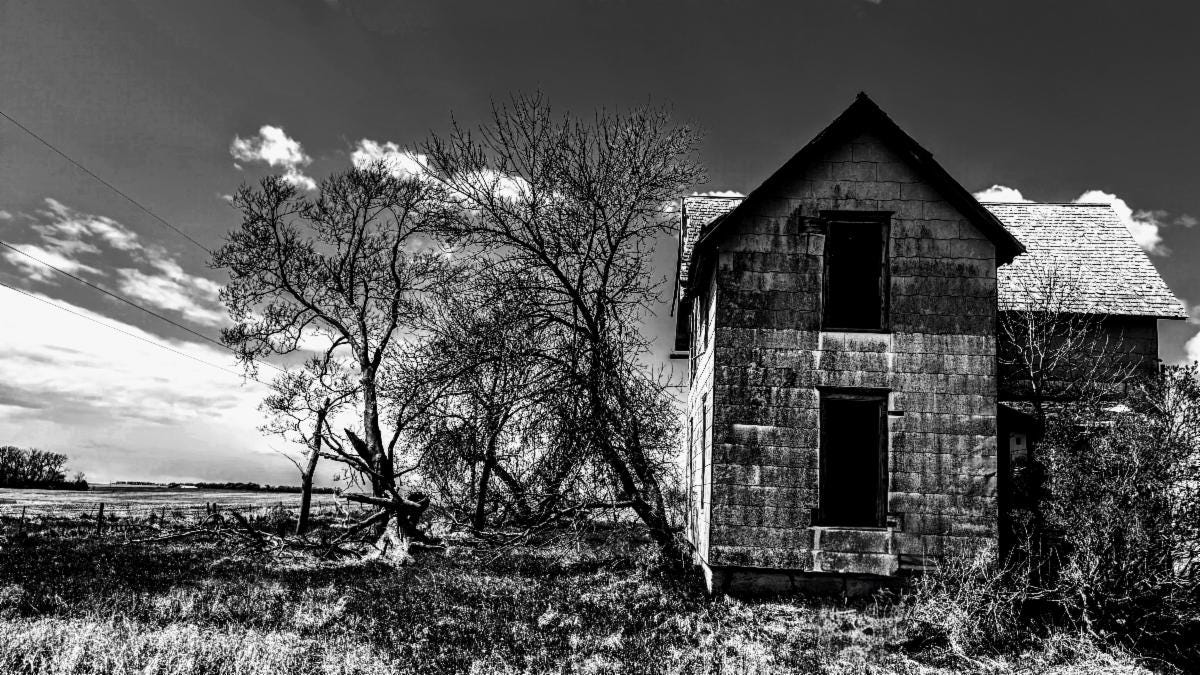
Afterward, I saw an old house in a field. It invited me closer.
Stand here for a while.
Presence, Not Pretense
It didn’t try to impress me. No sweeping drama. No “scenic overlook” sign telling me where to stand and feel something. It just offered itself, together with open fields, a weathered horizon, and wind that seemed to have been blowing since before anyone lived there.
Around me, pheasants in the grass. Ducks rising from sloughs. Loons wailing across water in that lonely, haunting way. And ticks.
Not the most welcome companions, of course. But very much part of being in a real place instead of a curated one.
The place required nothing of me. It didn’t ask if I was thoughtful, accomplished, healed, or interesting. It simply stood for what it was. And it invited me to be there, too.
Connection to Place
We often talk about connection to people—and rightly so. But there is another intimacy we tend to overlook: connection to place. Not as metaphor, but as something physical and lived. Something the body recognizes before the mind tries to explain it.
The feel of a northern wind against your face. The smell of soil and grass in early spring. The way light falls at a certain hour in a place you don’t know well, but know well enough to miss.
Place, it turns out, is not merely the backdrop of life.
It’s an active participant.
Environmental psychologists call this place identity—the idea that certain places become so woven into the self that they are no longer just where we are. They become part of who we are.
And sometimes, when the self has grown a little too crowded with noise, the land knows how to make room.
When the Brain Loosens Its Grip
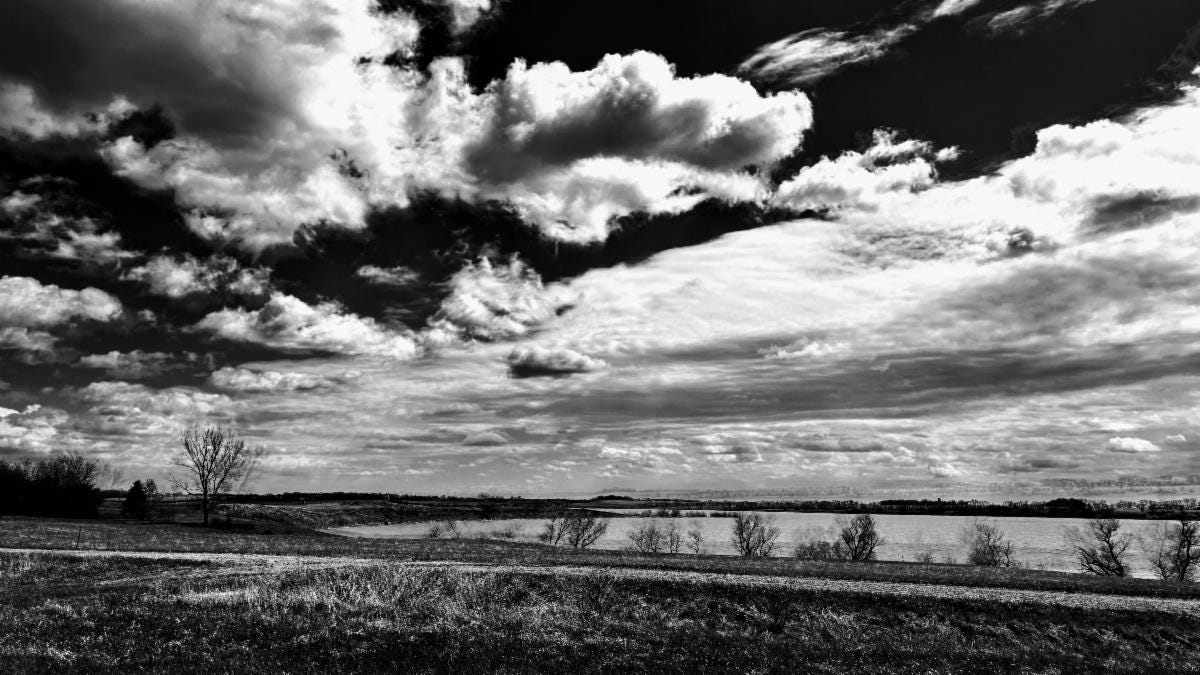
Somewhere between the wind and the bird calls, my mind—usually busy narrating, organizing, and staying in charge—began to still.
Psychologists call this attention restoration. Natural environments engage our involuntary attention, the kind that doesn’t require any effort. And they allow our directed attention—the kind we spend so much of ourselves managing—to recover. The effect is not only mental. It runs through the body, too.
That’s why a walk in the woods—or a field—can leave you restored and thinking more clearly than before. Not because you solved anything, but because you stopped trying to.
Out there on those plains, my inner narrator didn’t disappear entirely, but I no longer needed to listen. The place was speaking instead.
Wind. Grass. Water. Footsteps.
And soon, something familiar returned: the feeling of being located. Not geographically, but internally. A sense of being held. Not by people, but by place. A memory of belonging—even though I had never been there before.
You Know Places Like This
You’ve likely known places like this, too.
Not famous places. Not necessarily beautiful ones by anyone else’s standards. But places that connect you to something beyond yourself.
A stretch of woods behind a childhood home. A lake you visited every summer. A sidewalk route you used to walk when life felt simpler. A park bench that seemed, somehow, to know exactly how much of you to hold.
Places like that do not live only in the mind.
They live in the body.
You can return physically or remember them from afar, but something in you begins to recalibrate.
The Signs
Here are a few signs that you are connected:
You return without quite knowing why.
Not for productivity, not for exercise, not to cross something off a list. You return because being there restores something basic in you, something you had not realized you had misplaced.
Your pace relaxes and you don’t resist.
You slow down. You linger. You let yourself be where you are instead of on your way somewhere else.
You can be alone without feeling lonely.
The place itself feels like company. Something in the land, the light, the air, makes solitude feel less like absence and more like presence.
You remember sensory details.
The smell of that kitchen. The quality of light in that room. The path through those trees. The place is not just the stage where life happened. It is part of the memory itself.
You feel grief when it changes.
A coffee shop closes. A trail gets developed. A childhood home falls into disrepair. That pang is solastalgia—distress caused by environmental change in places we love. A new word for an old ache.
The Parting
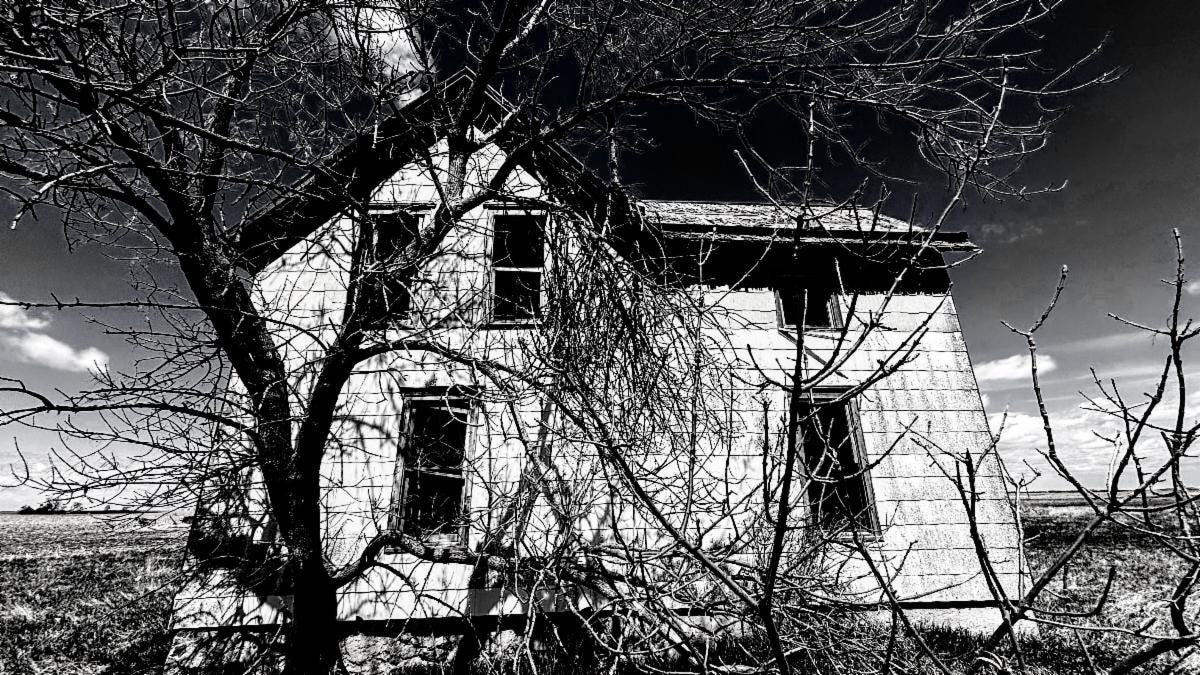
I didn’t stay long at that old house. Long enough to feel the wind shift. Long enough to hear birds calling from somewhere beyond sight. Long enough for something in me to settle.
Not transform. Just settle.
And maybe that’s enough.
You may not leave transformed either. But you might leave quieter. More grounded. More available to the part of yourself that remembers how to just be.
Maybe that is what place offers most: not escape, not transcendence, but a steadier kind of presence. A reminder to stand in one spot and feel, however briefly, that you are not lost to yourself.
In that place, you are found.
Sometimes I need only to stand wherever I am to be blessed.
—Mary Oliver
REFLECT
What place—past or present—makes you feel most grounded in yourself? In something greater than yourself? What specifically about it has that effect?
Where do you feel even a small sense of connection to place, and how might you deepen it?
What would it take to spend time in a meaningful place this week?

BEFORE YOU GO …
Tap the ❤️ and re-stack this post so we can reach as many readers as possible. Thanks!
ABOUT
Mark Vickstrom is a pastor, lawyer, and healthcare consultant writing about well-being, science, and spirituality. His work explores the intersection of ancient wisdom, modern psychology, and the comedy of being human. His counseling and group facilitation work centers on change and recovery for individuals, families, and organizations. Mark is a graduate of Princeton Theological Seminary, Michigan Law School, and Colorado State University. He lives in Evergreen, Colorado.

I’m reflecting on that place, hoping I can return to experience it. I’ll just go back in my memory for now. Thanks Mark
It comes down to simplicity. The basics. All the stuff people had before the world got so noisy.