

You Can’t Get There Alone
How Community Makes Meaning Real

You can get surprisingly far on your own.
You can fill your life with wonder, lose yourself in meaningful work, and even make sense of your story.
But you can’t finish the journey alone.
Meaning needs a place to belong—and people to belong to.
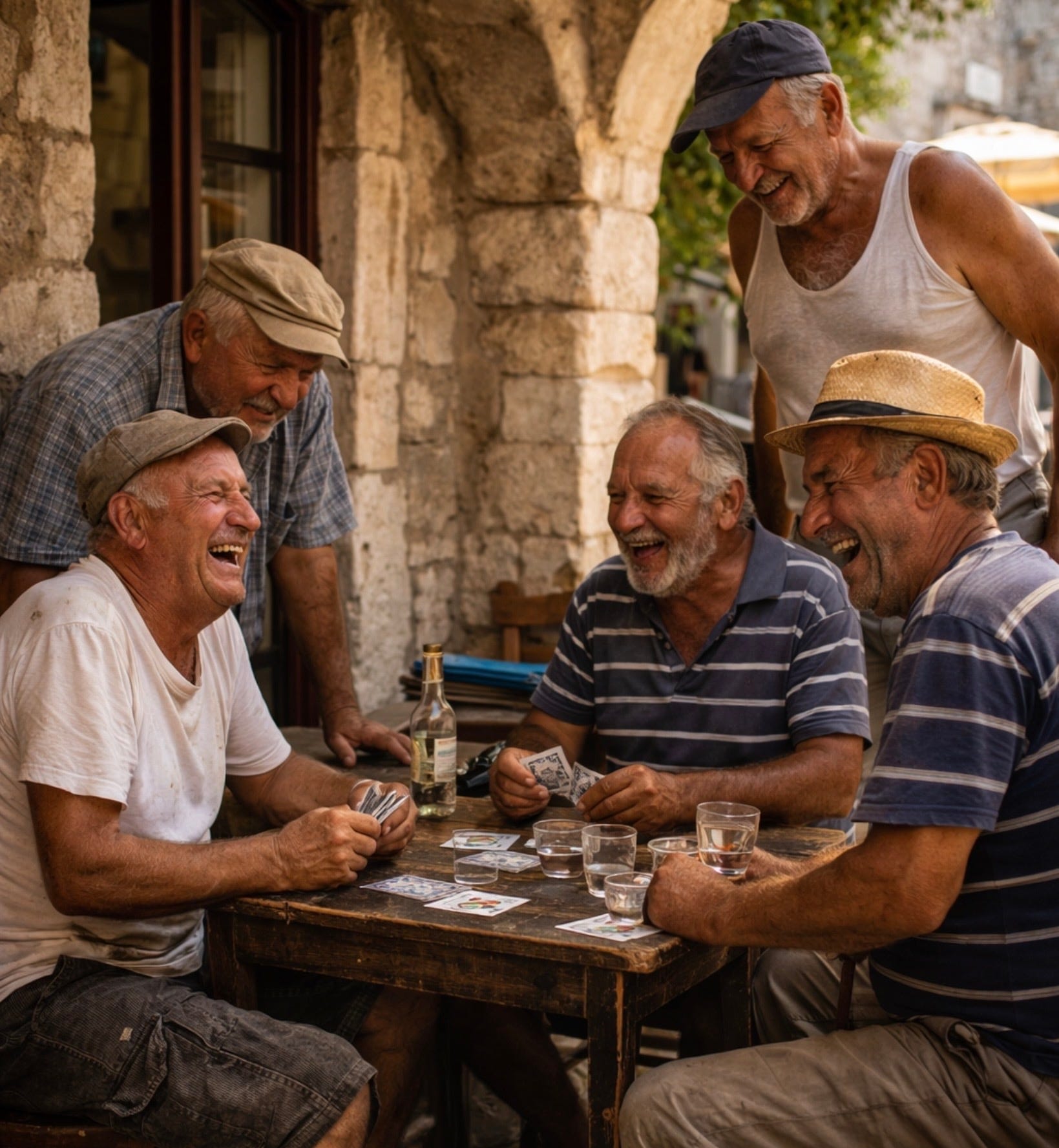
It was a sunny afternoon on the island of Korčula, off the Dalmatian coast of Croatia, and we were walking through an old fishing village when I saw them.
A group of older men—six, maybe eight—gathered around a table outside a café in the shade of a stone archway. Cards on the table. Small glasses. A conversation that might’ve been going on for hours and showed no sign of ending.
One of them said something, and the others laughed—from the belly, the way people laugh when they’ve known each other long enough to find the same things funny without explanation.
There was something in that scene—the ease of it, the rootedness, the complete absence of performance—that stopped me the way beauty stops you.
I thought: that’s it. That’s what community looks like.
Not an event, not a network, not a strategy. Just people who belong to each other, in a place that belongs to them, with nowhere better to be.
WHAT COMMUNITY IS
Connection is a moment. Community is a place.
That distinction matters, because much of what passes for community in modern life is just a collection of individual connections—relationships that are real but private, meaningful but unshared.
We have contacts and colleagues and people we genuinely like. What many of us lack, though, is the deeper thing: a group, a tribe, a neighborhood in the fullest sense—a space where we are not just known by one but held by many.
In How to Design a Meaningful Life, Bill Burnett and Dave Evans describe community as the fourth and culminating capacity for a meaningful life: a shared space where people are genuinely invested in one another’s flourishing, not just their own. The research confirms how much it matters:
Harvard’s Study of Adult Development, now nearly ninety years old, found that strong, high-quality relationships are the clearest predictor of well-being and longevity. Not wealth. Not achievement. People who thrived into old age were those who were embedded in communities—known, needed, and missed when they were gone.
Dan Buettner’s research into the Blue Zones found the same thing. In places like Sardinia, Okinawa, Ikaria, and the Nicoya Peninsula, people live long, healthy lives not just because of diet or activity, but because of something more fundamental: they belong. Community there is something they live inside of.
The men of Korčula, laughing over cards in the afternoon shade, would understand that.
BEING LET IN
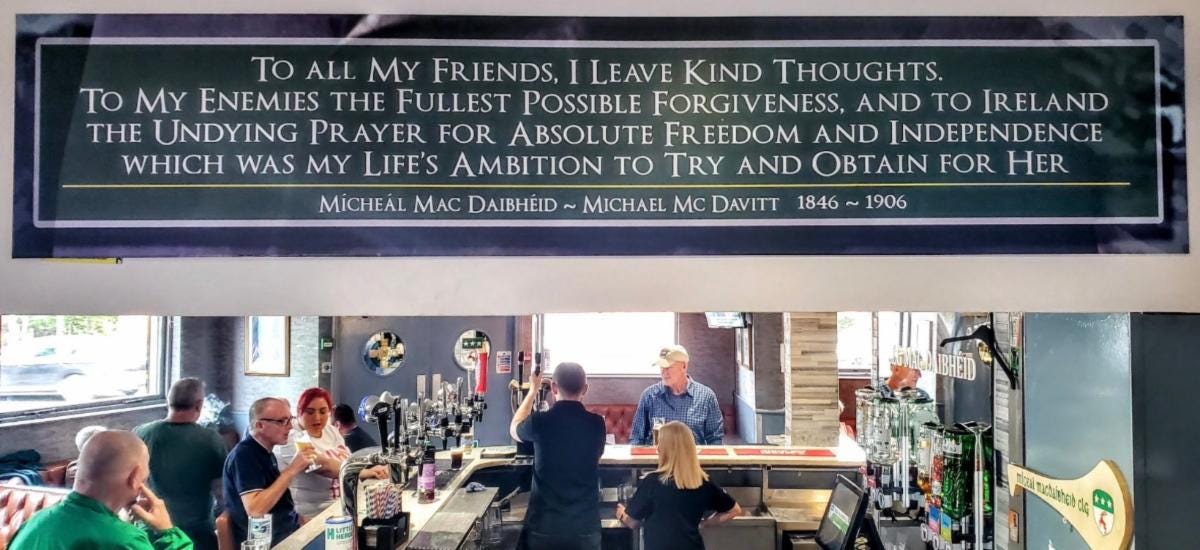
Last summer, I wandered into a locals’ pub on the Falls Road—the old Republican heartland of West Belfast, Northern Ireland. Not a place that typically appears in travel guides.
A handful of men were at the bar, older, clearly regulars. One of them looked over, registered that I was a stranger, and asked where I was from. That was the door. I walked through it.
What followed was an afternoon I couldn’t have planned: the history of the neighborhood in living memory, told by men who had lived it—the Troubles, the peace, what changed and what didn’t.
One man lived across the street. Another, who had moved from the area, rode a bus six miles every day to be with his mates. They laughed and argued with each other and didn’t mind if I listened. Beers and time both passed without my noticing.
What stayed with me afterward was not just the warmth, but the structure underneath it. Those men had a community. It had a place, a rhythm, a shared history. I was a guest inside something built over years, and the reason I could be welcomed so readily was precisely because the structure was strong enough to hold someone new without losing its shape.
The most telling thing about real community is that it can welcome a stranger without becoming something else. It is secure enough in itself to make room.
WHAT WE’VE LOST
Most of us, if we’re honest, don’t have what those men in Korčula and Belfast have.
We have connections—some of them deep and sustaining—but not always the shared container that holds them. We move too often. Schedule too tightly. Manage our identities too carefully to let the slow accretion of shared life do its work.
But community, unlike connection, takes time. It is built in the ordinary moments, the recurring rituals, the unremarkable afternoons that accumulate into something irreplaceable.
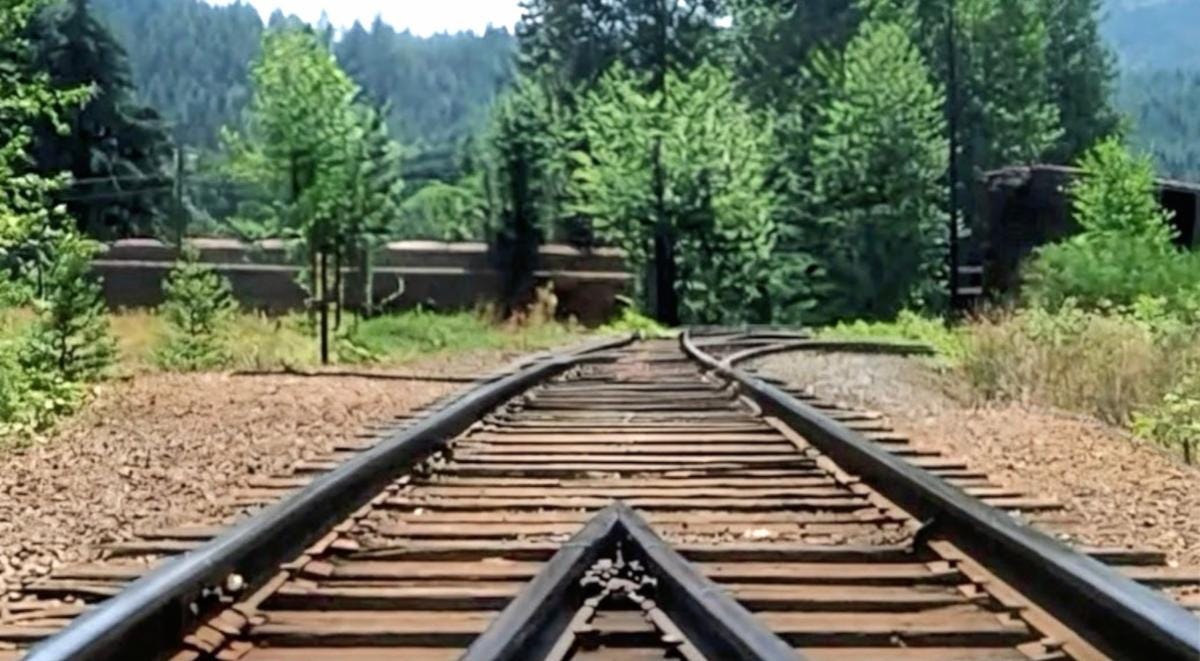
There’s a line in Stand By Me that captures this loss precisely. Four boys on a journey, walking and camping along railroad tracks, sharing joy, pain, adventure, and life. The narrator looks back as an adult and laments:
I never had friends later on like the ones I had when I was twelve. Jesus, does anyone?
But the grief in that line isn’t nostalgia for youth. It’s grief for a kind of belonging—unguarded, unhurried, rooted in shared experience—that becomes harder to access as the years pass and the armor thickens.
DESIGNING COMMUNITY INTO YOUR LIFE
In Korčula and Belfast, community grew organically from proximity, shared history, and the simple discipline of showing up.
Most of us have to be more deliberate:
1. FIND THE SHARED PURPOSE
The richest communities form around something people do together, not just around each other. A choir. A faith group. A weekly gathering. If community is missing, the first question isn’t who you want to be close to—it’s what you care about enough to return to, regularly, alongside other people.
2. GO DEEPER, NOT WIDER
One group where you are genuinely known is worth more than a dozen pleasant acquaintances. If your social life feels broad but thin, the question isn’t how to meet more people. It’s how to let the people and groups you already have see more of you.
3. SHOW UP CONSISTENTLY
Community is built on the ordinary far more than the exceptional. The regular dinner. The weekly practice. The standing ritual that says, I’m not going anywhere. Consistency is the architecture of trust, and trust is the architecture of belonging.
4. INVEST IN THE WE
Connection asks: how can I be known? Community asks: how can we flourish together? Check on the person who’s been quiet. Welcome the newcomer. Show up even when you don’t feel like it. Community isn’t just something you receive, it’s something you help others sustain.
THE WHOLE PATH
In this series, we’ve traced four capacities that together make a meaningful life possible:
Wonder cracked us open—to moments where the ordinary gives way to something vast.
Flow absorbed us—drawing us fully into work and experience until the self falls away.
Coherence aligned us—helping us make sense of our lives as a story with a through-line.
And now community holds us—in a shared space that holds many other people, too.
Because meaning, in the end, is not a private achievement. It happens in places where people belong to one another. It’s the holy vessel in which a well-lived life becomes sanctified and real ...
at a table in the shade on a Croatian island
in a pub on the Falls Road
along the railroad tracks
in any small gathering of people who have decided, without quite saying so, that this is their place and these are their people.
That is enough. That, it turns out, is everything.
REFLECT
What tracks are you traveling these days, and who is with you?
Where do you most belong right now—the group or place where you are genuinely known and held, not just liked or respected? If the answer is unclear, what shared purpose might draw you toward the community you’re missing?
Where are you investing in individual connection but neglecting the shared space that could hold it? What would it look like to tend the we, not just the you-and-me?

BEFORE YOU GO …
Tap the ❤️ and re-stack this post so we can reach as many readers as possible.
ABOUT
Mark Vickstrom is a pastor, lawyer, and healthcare consultant writing about well-being, science, and spirituality. His work explores the intersection of ancient wisdom, modern psychology, and the comedy of being human. His counseling and group facilitation work centers on change and recovery for individuals, families, and organizations. Mark is a graduate of Princeton Theological Seminary, Michigan Law School, and Colorado State University. He lives in Evergreen, Colorado.
Amen! Is it too close to Good Friday to say, “nailed it”?😉